
Shipping Strategy for Festive Season Sales: A Practical Diwali & Sale-Day Guide for Small D2C Sellers
1 October 2026 · 8 min read · by Courier Uncle team
Festive season is exciting and exhausting in equal measure. Orders jump three to five times in a matter of days, and your team, your packing table, and your own two hands don’t grow along with them.
If you’re a D2C brand, a Meesho reseller, an Amazon seller, or a small shopkeeper who just started shipping online, this guide is for you specifically. Not an enterprise ops playbook with dispatcher rotas and a CX hiring plan — a realistic, scaled-down version built for someone doing this mostly on their own, or with a small team, going into Diwali or any other big sale window.
Why Festive Season Breaks Small Sellers Specifically
Going from 20-30 orders a day to 80-100 might look modest next to a big brand’s jump from 5,000 to 25,000. But at your scale, that same 3-4x multiplier hits a business with no buffer team to absorb a mistake. One missed pickup, one wrong address, and there’s no ops department quietly fixing it behind the scenes — it’s just you, noticing it a day later.
There’s also no room to “renegotiate SLA terms” with a courier the way a large brand might. That’s not a small-seller failure — it’s just the reality of scale, and it’s exactly why the fixes in this guide lean on tools and simple habits instead of contract leverage you don’t have.
Add to that: festive buyers skew more toward first-time, impulse, gift purchases, and COD orders from these buyers carry more refusal risk than your usual customer base. That risk shows up right when your order volume — and your ability to handle it — is already stretched thin.
Start Here: A Realistic Timeline (Not a 45-Day Ops Sprint)
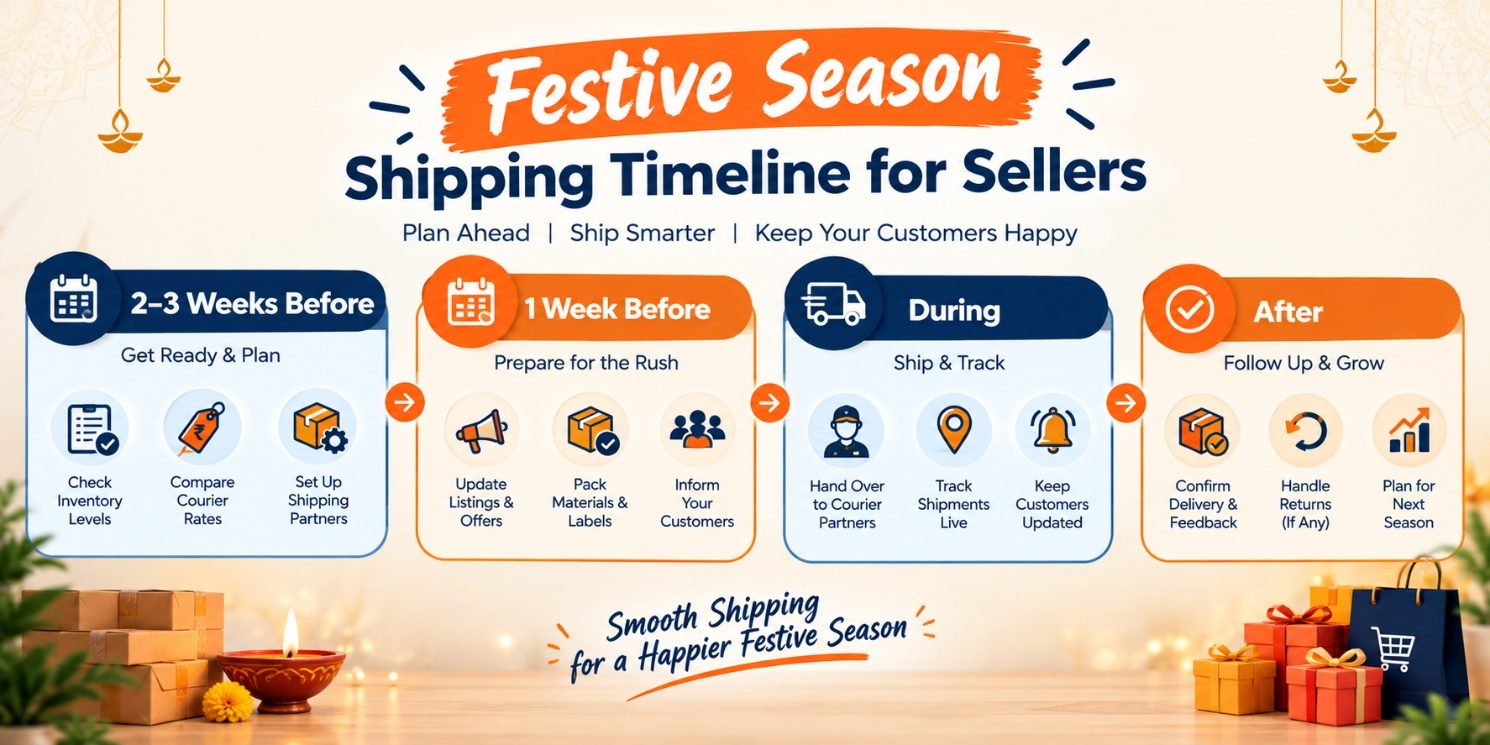
2-3 weeks before the sale
- Check that your courier or aggregator actually covers your top festive-buyer cities well, not just your usual base
- Stock up on packaging — a sensible amount for your expected volume, not a warehouse-scale order
- Decide your COD verification approach for the season before the rush starts, not mid-way through it
1 week before
- Test your tracking and customer communication messages so they’re ready to send, not written on the fly
- Make sure your return policy is clearly visible, and your product pages show honest, realistic delivery dates
During the rush
- Same-day NDR follow-up becomes non-negotiable — no exceptions, even on your busiest day
- Check your RTO numbers daily, even if it’s just a quick manual glance at your dashboard
After the rush
- Handle the returns wave as it comes, rather than being surprised by it
- Note down what broke this year, so next festive season starts from a better position
Get Your Courier Setup Right Before the Rush
Here’s the single most accessible fix available to a small seller: use a multi-courier aggregator instead of leaning on one default courier. You can’t call up a courier and negotiate extra festive capacity the way a large brand does — but you can add a second courier option to your setup in a matter of minutes.
This matters more during festive specifically, because if your one courier saturates or slows down in a particular zone, you have zero fallback and no team standing by to manually work around it. Check coverage specifically for the cities your festive buyers are likely to come from — gifting orders often go to different cities than your usual customer base does.
Watch Out for Festive Surge Charges
Something worth knowing before your festive-month courier bill arrives: fuel surcharges, COD handling fees, or minimum billable weight charges can shift during peak demand periods. A seller who isn’t watching closely can get a genuine cost surprise on an invoice that used to feel predictable.
The fix is simple — ask your courier or aggregator directly whether festive-period rates differ from your usual rate card, and check your first couple of festive-week invoices closely rather than assuming they’ll match what you’re used to.
Manage COD Without an Enterprise Risk Model
Festive COD risk genuinely rises — more first-time buyers, more gift orders, more impulse purchases that don’t feel as committed as a regular order. You don’t need an “AI risk-scoring model” to handle this, though. A few manual habits go a long way.
- A quick WhatsApp confirmation for high-value or first-time COD orders before dispatch
- A small prepaid discount nudge at checkout — “pay online and save” tends to convert better than a COD penalty framing
- Partial COD — a small token payment upfront — for pincodes you already know carry repeat RTO risk
Don’t Skip Address Confirmation on Gift Orders
Festive orders often ship somewhere different from a buyer’s usual address — a parent’s house, a friend’s office, wherever the celebration is happening. Flag these and confirm details before dispatch instead of assuming your standard address data holds.
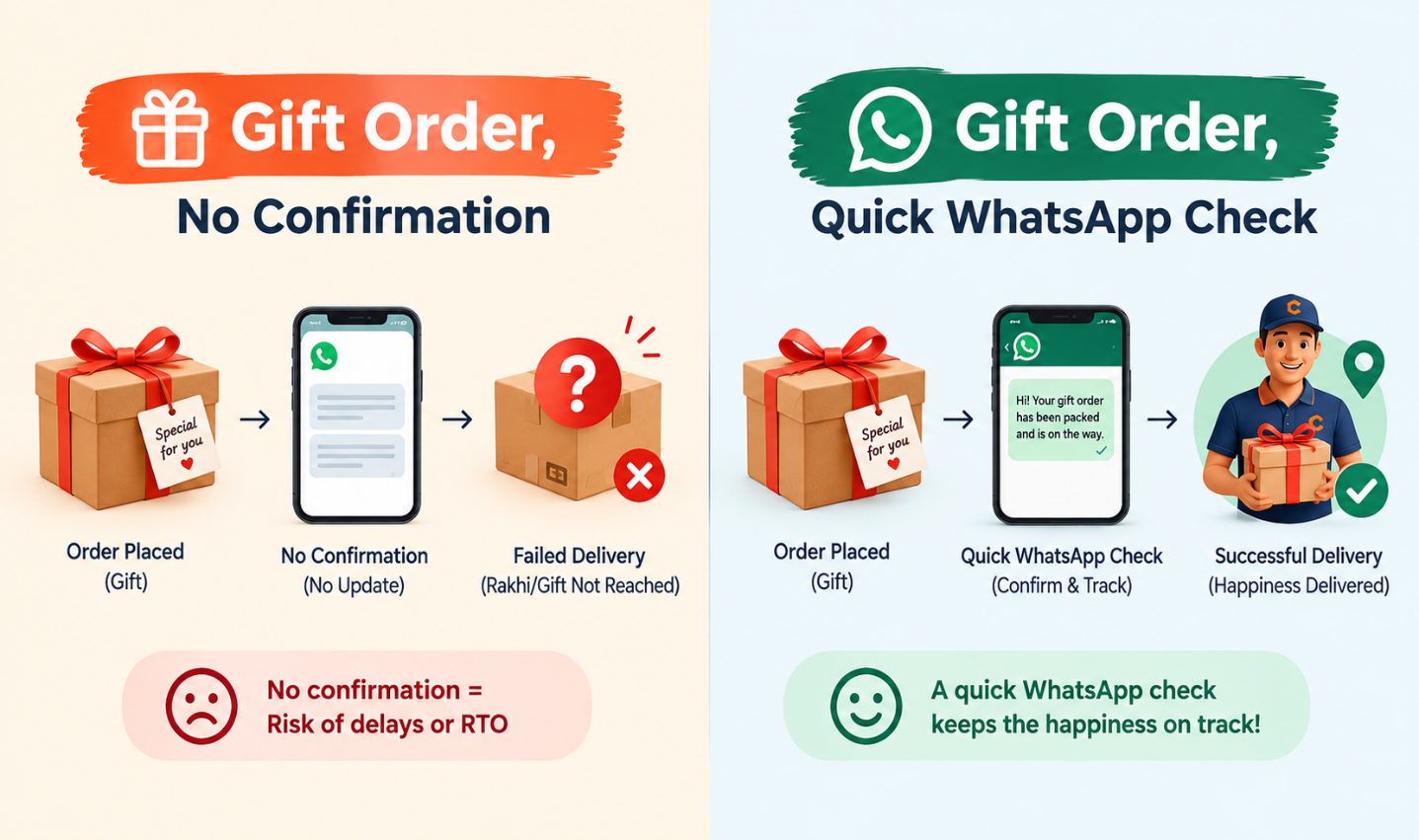
A quick WhatsApp message or call for gift-flagged or unusual-address orders catches a meaningful share of what would otherwise become a failed first attempt, right during the week you can least afford one.
Same-Day NDR Follow-Up Isn’t Optional During Festive
A failed delivery attempt during festive season is far more likely to slide straight into RTO if it isn’t followed up the same day — courier reattempt windows tend to get tighter under peak load, and a delay of even one extra day can be the difference.
The small-seller version of this doesn’t need a multi-tier automated workflow. A personal WhatsApp message or a quick call, done the same day, every day, for the length of the rush — that’s genuinely enough. The habit matters more than the tooling here.
If You Sell on Meesho or Amazon, Check This Before the Sale
Marketplace sale events often come with tightened dispatch SLA windows, and missing them can affect your seller rating right when order volume — and your visibility on the platform — matters most.
Check your seller dashboard for any festive-specific policy updates before the sale starts, not after you’ve already missed a few dispatch windows and noticed your rating slipping.
A Realistic Packaging Stock-Up (Without a Warehouse)
Enterprise advice to stockpile 60-90 days of packaging materials doesn’t translate to a small seller — you likely don’t have the storage space, and you don’t need that much buffer. The practical version is simpler: estimate your festive volume against your usual packaging use, and order a bit early.
If your festive volume roughly doubles for two to three weeks, order accordingly rather than reactively. Local packaging suppliers get busier closer to the festival too, so a little lead time protects you from running short mid-sale.
A Real Example: Surviving Diwali as a Two-Person Team
A small home decor D2C seller in Noida, run by two people, went into their first big Diwali sale the previous year completely unprepared — one courier, no COD verification, and NDR follow-up whenever they got around to it. RTO hit nearly 34% that season, and the returns backlog took weeks to clear afterward.
This year, they made three specific changes from this exact guide: added a second courier through an aggregator for their weaker-performing cities, started a quick WhatsApp confirmation for COD orders above 1,200 rupees, and committed to same-day NDR follow-up no matter how busy the day got.

RTO for this Diwali season came in at around 19% — still higher than their normal-month baseline, but nowhere close to the previous year’s number, and manageable enough that the two of them handled the entire rush without needing to hire anyone temporarily.
Frequently Asked Questions
How much does order volume typically increase during Diwali for small D2C sellers?
It varies by category, but a 3-5x jump over baseline daily orders during the peak festive window is common, even at small scale. The exact multiplier matters less than making sure your courier setup and follow-up habits can absorb whatever your own historical pattern looks like.
Do I need multiple couriers if I’m a small seller shipping festive orders?
It’s one of the highest-leverage, lowest-effort changes available to you. A single courier gives you no fallback if it saturates or slips in a particular city during peak demand — adding a second option through an aggregator takes minutes and directly protects your festive delivery performance.
Should I turn off COD during festive season to reduce RTO risk?
Not necessarily — COD still drives real conversion, especially from first-time festive buyers. A better approach is tightening verification (WhatsApp confirmation, partial COD for risky pincodes) rather than removing the option entirely and losing those sales.
How early should a small seller start preparing for Diwali shipping?
Two to three weeks out is a realistic, sufficient window for most small sellers — enough time to check courier coverage, stock packaging, and set your COD approach, without needing the 45-day enterprise sprint that large brands run.
Do Meesho and Amazon have different rules during festive sales I should check?
Yes — dispatch SLA windows and policy details often tighten during major platform sale events. Check your seller dashboard for festive-specific updates before the sale starts, since missing a tightened SLA can affect your account rating.
The Bottom Line
Surviving festive season well doesn’t require an enterprise ops setup. It requires a handful of specific habits — a backup courier, some form of COD verification, and same-day NDR follow-up — applied consistently through the rush, not perfectly, just consistently.
The two to three weeks before your big sale matter far more than anything you can fix once the orders are already pouring in. Start there.
Add a backup courier partner before the rush hits. Compare live options on Courier Uncle — free sign-up.
Ship smarter with Courier Uncle
Compare live rates across multiple couriers on your actual routes — sign-up is free, no volume commitment.
Compare rates free →